Smart Medical Tourism with SurgeryPlanet: Compare Global Surgery Costs Confidently
Introduction
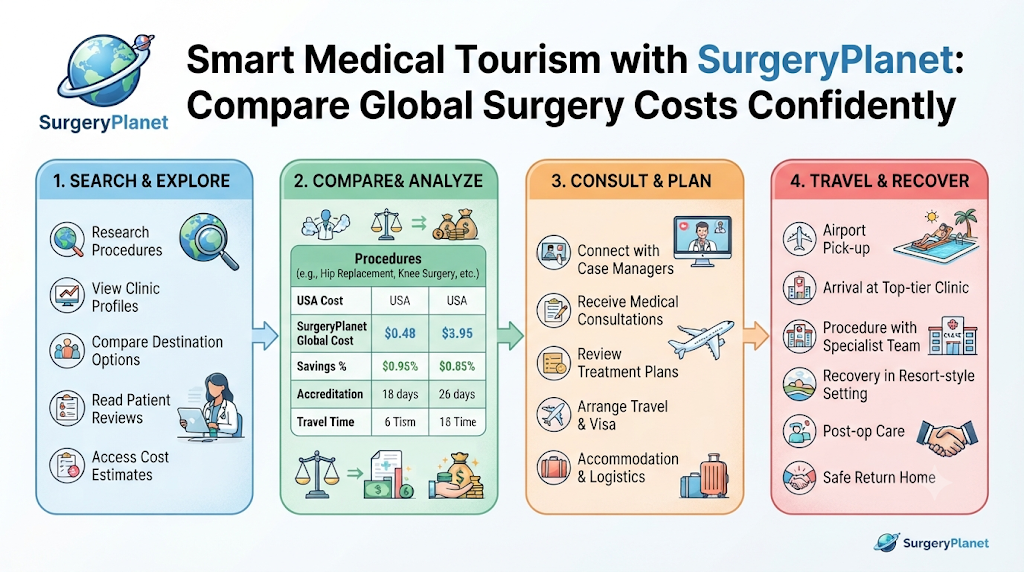
Healthcare costs are rising in almost every country, and many families find that essential surgeries feel financially out of reach. As a result, more patients are exploring medical tourism—travelling abroad to receive surgery at high-quality hospitals for a fraction of the cost they would pay at home.Cost transparency is one of the biggest challenges in this journey. Patients often struggle to compare surgery prices, understand what is included in a package, and evaluate hospitals and surgeons in different countries. Without a structured approach, it is easy to focus only on headline prices and miss important details like accreditation, surgeon experience, and recovery support.SurgeryPlanet is an international medical tourism platform that connects patients with trusted hospitals and surgeons across dozens of countries, with a focus on accredited providers and clear, upfront cost information.Imagine a patient who needs knee replacement surgery.
What Is SurgeryPlanet?
SurgeryPlanet is a global medical tourism platform that helps patients find accredited hospitals and experienced surgeons abroad, compare transparent surgery costs and treatment packages, and plan safe medical travel from first consultation to recovery.
Understanding Medical Tourism
What Is Medical Tourism?
In Simple Terms
Medical tourism means travelling to another country to receive healthcare—often surgery or specialized treatment—that may be too expensive or hard to access at home. Patients seek orthopedic surgery, cardiac procedures, IVF, dental care, cosmetic surgery, and more in destinations known for lower costs and strong medical expertise.
Real-World Example
A patient who cannot afford a local surgery package for knee replacement starts researching India and Thailand. They discover that the same procedure can cost far less abroad, with modern hospitals and experienced surgeons who regularly treat international patients.
Why It Matters
Understanding what medical tourism is helps you see it as a strategic healthcare decision rather than just “cheap treatment.” It is about finding the right balance between quality, safety, and affordability.
Key Takeaways
- Medical tourism involves travelling abroad specifically for medical treatment.
- Common procedures include orthopedic, cardiac, dental, IVF, and cosmetic surgery.
- It is driven by cost, access, and specialist expertise.
- It must be planned carefully to remain safe and effective.
Why Patients Travel Abroad for Surgery
In Simple Terms
Patients travel abroad for surgery to reduce costs, access faster treatment, or receive procedures that have long waiting lists or limited availability in their home country. In many cases, they can save 50–80% compared to local prices.
Real-World Example
A 62-year-old patient in the UK needs knee replacement surgery but faces a long waiting time and a local cost in the tens of thousands of dollars. After researching India, they discover knee replacement there can cost a few thousand dollars with experienced surgeons and international-standard hospitals. The savings make surgery financially possible.
Why It Matters
Knowing why patients travel helps you understand that medical tourism is not only about low prices. It can offer quicker access, experienced specialists, and modern infrastructure—provided you choose carefully.
Key Takeaways
- Patients travel to reduce costs and avoid long waiting times.
- Savings of 50–80% are possible in many destinations.
- Quality depends on hospital standards and surgeon experience.
- A structured comparison is vital before deciding to travel.
Growth of International Healthcare
In Simple Terms
Over the past 15–20 years, international healthcare has grown rapidly. Countries like India, Turkey, Thailand, UAE, and Singapore have invested heavily in modern hospitals that cater specifically to international patients, with dedicated patient coordinators and English-speaking staff.
Real-World Example
An international patient landing in India for surgery is met at the airport, taken to a hospital that routinely treats foreign patients, and supported by translators and coordinators. These teams manage appointments, billing, and discharge planning to make the process smoother.
Why It Matters
This growth means patients now have genuine, structured options for safe treatment abroad. Choosing destinations with mature medical tourism infrastructure reduces confusion and risk.
Key Takeaways
- Many countries have developed strong medical tourism ecosystems.
- International patient desks, translators, and coordinators are common.
- Standardized clinical protocols improve safety and predictability.
- Mature destinations are safer choices for complex surgeries.
Benefits and Risks of Medical Tourism
In Simple Terms
Medical tourism offers major benefits—lower costs, faster access, and experienced specialists—but also carries risks such as variable quality, travel-related complications, and difficulties in arranging follow-up care at home.
Real-World Example
A patient travels to Turkey for heart bypass surgery due to lower costs and modern cardiac centers. The operation goes well, but they did not plan local follow-up, and recovery becomes stressful once they return home with limited cardiology support.
Why It Matters
Benefits are realised only when risks are actively managed. Choosing accredited hospitals, planning for recovery and follow-up, and using a structured platform like SurgeryPlanet helps reduce those risks.
Key Takeaways
- Benefits: cost savings, faster treatment, access to specialists.
- Risks: inconsistent quality, travel stress, follow-up challenges.
- Accreditation and careful planning can reduce risk significantly.
- Using trusted intermediaries improves safety and clarity.
Local Treatment vs Medical Tourism
| Local Treatment | Medical Tourism |
|---|---|
| Familiar healthcare system and local doctors. | International options with potential cost savings of 50–80%. |
| Easier follow-up and long-term care close to home. | Requires travel and careful coordination of follow-up on return. |
| Higher costs in some countries, especially for major surgeries. | Lower surgery costs in destinations like India, Turkey, and Thailand. |
| Shorter communication lines but possible long waiting lists. | More appointment flexibility but added travel time and logistics. |
Understanding Surgery Costs Around the World
Why Surgery Costs Vary by Country
In Simple Terms
Surgery costs differ between countries because of variations in labour costs, hospital overheads, currency differences, government regulations, and insurance structures. Lower living and operating costs in countries such as India or Turkey often translate into more affordable surgery prices.
Real-World Example
A single dental implant can cost thousands of dollars in the United States, but a few hundred dollars in Turkey or Mexico. The implant materials may be similar, but wages, clinic overheads, and insurance models make the total price lower abroad.
Why It Matters
Recognizing the structural reasons behind cost differences helps you see medical tourism as a way to achieve cost-efficiency, not automatically as lower quality care.
Key Takeaways
- Labour, overhead, and currency heavily influence surgery prices.
- Lower-cost countries can still offer modern, high-quality care.
- Price gaps are large for dental, orthopedic, and cardiac procedures.
- Understanding cost drivers makes comparison more realistic.
Components of Treatment Costs
In Simple Terms
The total cost of surgery includes surgeon fees, hospital charges, implants or devices, anaesthesia, diagnostic tests, medications, and post-operative rehabilitation. Each of these components can vary significantly between providers.
Real-World Example
In India, knee replacement costs usually cover the surgery, hospital stay, implant cost, and immediate post-operative care. Additional expenses include pre-operative tests, physiotherapy sessions, and follow-up visits, which can add a substantial amount to the overall budget.
Why It Matters
Patients often compare only the headline “surgery price” and miss other components. To make a fair comparison, you need to know exactly which cost elements are included in each quote.
Key Takeaways
- Total cost is a combination of many individual components.
- Pre- and post-operative expenses can change the final bill.
- A detailed cost breakdown is essential for fair comparison.
- Use consistent components when comparing different providers.
Hidden Expenses Patients Often Miss
In Simple Terms
Many patients overlook travel costs, visa fees, extra hotel nights, companion expenses, extended physiotherapy, and costs related to potential complications when budgeting for surgery abroad.
Real-World Example
A patient books knee replacement surgery in India based on a hospital quote but later realises they must pay separately for flights, visas, hotel, daily meals, and a companion’s travel. This increases the actual cost by hundreds or even thousands of dollars.
Why It Matters
Ignoring hidden costs can lead to financial stress. A realistic budget must combine medical costs with travel, accommodation, and recovery-related expenses.
Key Takeaways
- Hidden costs often include travel, visas, and accommodation.
- Rehabilitation and long-term medications may be extra.
- Ask for estimates of non-medical costs in advance.
- Build a buffer for possible extensions or complications.
Understanding Medical Tourism Packages
In Simple Terms
Medical tourism packages combine surgery costs with related services such as hospital stay, airport transfers, accommodation, and sometimes local tours. However, not all packages include the same elements.
Real-World Example
A knee replacement package in India might include surgery, 4–5 days of hospitalization, basic investigations, airport pick-up, and one follow-up visit, but exclude long-term physiotherapy or flights. Another provider could include rehabilitation and hotel stays for a higher package price.
Why It Matters
Packages simplify planning but can hide exclusions. You must check each cost component carefully to know what you are really getting for the quoted price.
Key Takeaways
- Packages bundle medical and travel-related services differently.
- Inclusions and exclusions vary widely.
- Very low package prices may have limited inclusions.
- Always compare packages using a standard checklist.
Cost Component Table
| Cost Component | Included or Additional |
|---|---|
| Surgery fees and operating theatre | Usually included in package price. |
| Hospital stay and nursing care | Often included up to a set number of days. |
| Implants or surgical devices | Usually included but may vary by brand and type. |
| Pre-operative tests and imaging | Sometimes included, sometimes billed separately. |
| Post-operative medications | Included during hospital stay; extra at discharge. |
| Physiotherapy and rehabilitation | Often partially included; extended rehab is additional. |
| Airport transfers and local transport | Commonly included in medical tourism packages. |
| Hotel or guest house accommodation | May be bundled or offered as an optional add-on. |
| Flights and visas | Usually additional and patient-funded. |
| Insurance and complication cover | Additional; useful for risk management. |
Knee Replacement Surgery Cost in India
Why India Is Popular for Orthopedic Procedures
In Simple Terms
India is a leading destination for knee replacement because it offers experienced orthopedic surgeons, modern hospitals, and surgery costs that can be up to 80% lower than in many Western countries. English is widely spoken in hospitals, making communication easier.
Real-World Example
A patient from the Middle East sees very high local prices for knee replacement. In India, they find that the procedure typically ranges from around 1.5–6 lakh INR (roughly a few thousand US dollars) depending on hospital, city, and implant type. They choose an internationally accredited hospital and save significantly while receiving quality care.
Why It Matters
Orthopedic procedures are major cost drivers. Choosing India can make knee replacement financially accessible without sacrificing quality, as long as you check accreditation and surgeon credentials.
Key Takeaways
- India offers substantial cost savings for knee replacement.
- Many hospitals have modern infrastructure and experienced surgeons.
- English-speaking staff support international patients effectively.
- Accreditation and surgeon experience are critical.
Factors Affecting Knee Replacement Costs
In Simple Terms
Knee replacement costs in India vary based on the type of surgery (unilateral vs bilateral, partial vs total), implant brand, hospital category, city, surgeon experience, and patient health conditions.
Real-World Example
A unilateral total knee replacement in a metro city may cost in the mid-range of typical figures, while bilateral or revision surgeries approach the higher end. Opting for imported, high-end implants or robotic techniques increases overall package cost.
Why It Matters
These factors explain why different quotes can vary widely. Understanding them helps you ask better questions and compare prices more fairly.
Key Takeaways
- Surgery type and implant choice strongly influence cost.
- City and hospital type (corporate vs smaller centre) matter.
- More experienced surgeons may charge higher fees.
- Complex health conditions add to overall cost.
Hospital Selection Considerations
In Simple Terms
When choosing a hospital in India for knee replacement, look at accreditation, the reputation of the orthopedic department, surgeon experience, infection control standards, and international patient support services.
Real-World Example
A patient using SurgeryPlanet shortlists two hospitals: one large, accredited institution with a high-volume joint replacement program, and one smaller clinic without international accreditation. Though the clinic is cheaper, the patient chooses the accredited hospital for higher safety and consistency.
Why It Matters
Hospital choice influences safety, outcomes, and overall experience. High-volume centers and accredited institutions tend to follow more standardized protocols.
Key Takeaways
- Prefer accredited hospitals with strong orthopedic units.
- Review surgeon profiles and case volumes.
- Ask about infection rates and rehab facilities.
- Check that an international patient desk is available.
Recovery and Rehabilitation Planning
In Simple Terms
After knee replacement, structured rehabilitation—physiotherapy, exercises, and follow-up visits—is crucial to achieving good long-term results. International patients must plan for both in-country recovery and ongoing rehab at home.
Real-World Example
A patient stays in India for two weeks after surgery, completes early physiotherapy at the hospital, and then at a nearby rehab centre. Before returning home, they receive a written rehabilitation plan to share with their local physiotherapist.
Why It Matters
Without proper rehab, patients risk stiffness, pain, and limited mobility even after a technically successful surgery. Recovery planning is as important as cost comparison.
Key Takeaways
- Rehabilitation is essential for successful outcomes.
- Plan physio sessions in-country and at home early.
- Ask for written exercise and recovery plans.
- Budget for rehabilitation as part of the surgery cost.
Heart Bypass Surgery Cost in Turkey
Why Turkey Attracts International Cardiac Patients
In Simple Terms
Turkey has become a major hub for cardiac surgery, including coronary artery bypass grafting (CABG), due to modern hospitals, experienced surgeons, and competitive prices compared to Western Europe and North America.
Real-World Example
A patient from Western Europe with limited insurance coverage explores CABG options in Turkey. They find well-equipped cardiac centres offering heart bypass surgery at lower prices, combined with services tailored for international patients.
Why It Matters
Cardiac surgeries are high-risk and high-cost. Choosing a destination with strong cardiac programmes and modern intensive care facilities is essential for safety.
Key Takeaways
- Turkey offers modern cardiac centres with experienced teams.
- Prices are generally lower than in Western Europe and the US.
- Many hospitals actively serve international cardiac patients.
- Careful selection of hospital and surgeon is critical.
Understanding CABG Procedure Costs
In Simple Terms
CABG costs in Turkey include surgeon fees, operating theatre use, intensive care, hospital stay, diagnostics, and medications. Prices vary by hospital type, number of grafts, and patient risk profile.
Real-World Example
A patient with multi-vessel disease receives several CABG quotes from Turkish hospitals. Even after adding travel and accommodation costs, the total remains substantially lower than at home, and the patient chooses a centre with a strong CABG track record.
Why It Matters
For major surgeries, cost must be viewed alongside capability. Lower prices are attractive, but ICU capacity, emergency support, and skilled staff are non-negotiable.
Key Takeaways
- CABG cost includes complex intensive care components.
- Price varies with hospital level and patient complexity.
- Always ask for detailed breakdowns for high-risk procedures.
- Confirm inclusions such as ICU stay and emergency coverage.
Hospital Accreditation and Quality Standards
In Simple Terms
For cardiac surgery in Turkey, international accreditation such as JCI, along with national certifications, indicates that the hospital follows standardized protocols for patient safety and clinical quality.
Real-World Example
A patient uses SurgeryPlanet to filter for JCI-accredited cardiac centres, then asks those hospitals about CABG case volumes and complication rates before deciding.
Why It Matters
Cardiac surgery is highly specialized. Accreditation, case volume, and ICU infrastructure are essential indicators of safety and quality.
Key Takeaways
- Prefer internationally accredited hospitals for heart surgery.
- Ask about CABG case volumes and outcomes.
- Confirm dedicated cardiac ICU availability.
- Use platforms that highlight accreditation when comparing hospitals.
Travel and Recovery Considerations
In Simple Terms
Heart surgery requires careful travel planning. Patients should arrive early for pre-operative evaluations, allow enough recovery time before flying home, and coordinate follow-up with local cardiologists.
Real-World Example
A patient arrives in Turkey several days before CABG, undergoes pre-operative tests, and remains there for two to three weeks post-surgery. Before returning home, they receive a rehabilitation plan and schedule follow-up visits with their local cardiologist.
Why It Matters
Flying too soon after heart surgery can be risky. Adequate in-country recovery and planned follow-up care are key to a safe journey.
Key Takeaways
- Plan arrival and departure dates around surgery and recovery.
- Allow sufficient time in-country after CABG.
- Coordinate local follow-up with a cardiologist at home.
- Include travel and accommodation costs in the budget.
Dental Implants Abroad Cost Comparison
Why Patients Travel for Dental Care
In Simple Terms
Dental implants and full-mouth rehabilitation are expensive in many countries. Patients travel to destinations such as Mexico, Turkey, Costa Rica, Hungary, Colombia, and Thailand to save 50–70% while still receiving quality care.
Real-World Example
A patient in the US needs multiple implants at thousands of dollars per implant. By travelling to Turkey, they find single implants costing a few hundred dollars and full-mouth solutions at a fraction of US prices.
Why It Matters
Dental tourism can turn unaffordable treatment into a realistic option. Patients must still evaluate clinic standards, implant brands, and follow-up arrangements carefully.
Key Takeaways
- Dental implants are much cheaper in many medical tourism hubs.
- Savings of 50–70% are common compared with US prices.
- Clinic quality and implant choice matter greatly.
- Follow-up and maintenance must be part of the plan.
Comparing Dental Implant Costs Across Countries
In Simple Terms
Countries differ in typical implant prices. Mexico, Turkey, Hungary, Colombia, Costa Rica, and Thailand generally offer lower costs than the US, often using well-known international implant brands.
Dental Implant Cost Comparison Table
| Country | Relative Cost | Key Advantages |
|---|---|---|
| Mexico | Low to medium; single implants around mid-hundreds to low thousands USD. | Close to the US, good savings, convenient travel. |
| Turkey | Very low; single implants a few hundred USD, full-mouth solutions far cheaper than US prices. | Strong dental tourism infrastructure, modern clinics. |
| Costa Rica | Low; many implants under typical US prices. | Quality clinics, proximity for US patients, tourist-friendly. |
| Colombia | Low; competitive implant pricing. | Growing dental tourism sector and experienced dentists. |
| Hungary | Low; widely known for affordable dental care. | Long-established European dental tourism hub. |
| Thailand | Low; implants cheaper than Western countries. | Experienced dentists, strong medical tourism ecosystem. |
| United States | High; among the most expensive globally. | Local access and follow-up but significantly higher costs. |
Factors Affecting Pricing
In Simple Terms
Dental implant pricing depends on the number of implants, the type of prosthesis (single crown, bridge, All-on-4), implant brand, clinic location, and whether bone grafting or sinus lifting is needed.
Real-World Example
A patient with jawbone deficiency requires bone grafting before implants, increasing cost in any country. Even with grafting, countries like Turkey or Hungary can still be much cheaper than the US for the same treatment plan.
Why It Matters
Comparing only per-implant costs is misleading. You must consider all procedures in the treatment plan: imaging, grafting, temporary teeth, and follow-up visits.
Key Takeaways
- Total cost depends on implant type, brand, and extra procedures.
- All-on-4 and full-mouth cases have higher baseline costs.
- Grafting and sinus lifts significantly impact pricing.
- Always ask for a full treatment plan, not just per-implant price.
Long-Term Treatment Planning
In Simple Terms
Dental implants require long-term follow-up. Patients must plan for maintenance visits, potential repairs, and routine dental care once they return home.
Real-World Example
A patient receives All-on-4 treatment in Turkey and returns home with a detailed maintenance plan. They identify a local dentist willing to handle follow-up and minor adjustments, ensuring long-term care.
Why It Matters
Neglecting follow-up can turn a successful initial procedure into a future problem. Local support must be part of your decision-making.
Key Takeaways
- Implants need ongoing maintenance and check-ups.
- Confirm local dentist support for follow-up care.
- Request written maintenance instructions and warranty information.
- Plan for possible future travel if major repairs are needed.
Best Country for IVF Treatment Abroad
Factors to Evaluate
In Simple Terms
There is no single “best” country for IVF. The right choice depends on success rates, legal regulations, costs, specialist expertise, and patient support services for your specific situation.
IVF Evaluation Framework
- Success rates: Look at clinic-specific success rates for your age group and treatment type.
- Legal regulations: Understand laws around egg and sperm donation, embryo storage, surrogacy, and age limits in each country.
- Cost considerations: Compare full cycle costs, including medications, lab procedures, consultations, and potential multiple cycles.
- Specialist expertise: Evaluate IVF specialists’ qualifications, experience, and subspecialty training.
- Patient support services: Check for counselling, translators, accommodation help, and clear communication during the cycle.
Real-World Example
A couple compares IVF options in several countries. One destination is cheaper but has restrictive laws around donor eggs. Another has slightly higher costs but clearer regulations and stronger support services. They choose the second destination, prioritising legal clarity and support.
Why It Matters
IVF is emotionally and financially demanding. A country and clinic with good outcomes, favourable laws, and strong support can make a huge difference to the patient experience.
Key Takeaways
- “Best” country varies by medical and legal needs.
- Compare success rates that match your age and treatment type.
- Understand legal rules before committing to a country.
- Consider support services and communication style, not just cost.
Importance of JCI Accredited Hospitals for Surgery Abroad
What Is JCI Accreditation?
In Simple Terms
Joint Commission International (JCI) is a global organisation that evaluates hospitals against strict quality and patient safety standards. JCI accreditation means a hospital has met rigorous criteria for care processes, safety checks, and continuous improvement.
Why Accreditation Matters
In Simple Terms
Accreditation acts as an independent quality check. JCI-accredited hospitals follow standardized protocols for surgery, infection control, medication safety, and staff training, making them safer choices for international patients.
Real-World Example
SurgeryPlanet highlights many JCI-accredited hospitals across major destinations such as India. Patients can filter their options based on accreditation status before requesting quotes, which simplifies quality screening.
Why It Matters
Accreditation does not guarantee outcomes but increases confidence that a hospital follows recognised international standards. It is especially important for major surgeries.
Key Takeaways
- JCI accreditation signals compliance with global safety standards.
- Accredited hospitals use standardized care and safety protocols.
- Accreditation is a key factor for major surgeries abroad.
- Platforms like SurgeryPlanet make accredited hospitals easier to find.
Questions Patients Should Ask Hospitals (Checklist)
- Is your hospital JCI-accredited or certified by another recognised body?
- How many procedures like mine do you perform each year?
- What are your infection rates and major complication statistics?
- Who will be my primary surgeon, and what is their experience?
- What exactly is included in the surgery package, and what is additional?
- How will you coordinate my follow-up care once I return home?
- What support is available for international patients (translation, coordinators)?
Choosing the Right Surgeon and Hospital
Credentials to Verify
In Simple Terms
Verify medical degrees, specialised training, board certifications, memberships in professional societies, and specific experience with your procedure.
Experience and Specialisation
In Simple Terms
Prefer surgeons who specialise in your procedure type (such as joint replacement, CABG, IVF, dental implants) and perform a high volume of those surgeries each year.
Patient Reviews and Outcomes
In Simple Terms
Patient testimonials, outcome statistics, and independent reviews help build a picture of how the hospital and surgeon perform in real-world conditions.
Communication and Transparency
In Simple Terms
Good surgeons and hospitals communicate clearly, answer questions openly, and provide written treatment plans and cost breakdowns.
Evaluation Framework
- Training: Verified degrees and specialist training.
- Volume: High annual case numbers for your procedure.
- Outcomes: Clear data on success rates and complications.
- Communication: Responsive, transparent, and patient-focused.
- Accreditation: Strong hospital accreditation and department reputation.
Understanding Medical Tourism Packages
What Is Typically Included?
In Simple Terms
Packages commonly include surgery, hospital stay, doctor fees, basic diagnostics, airport transfers, and limited follow-up visits. Exact details vary by provider and destination.
Accommodation and Travel Support
In Simple Terms
Many providers offer support with hotel bookings, airport pick-up, and local transport. Flights and visas are usually the patient’s responsibility.
Follow-Up Care
In Simple Terms
Some packages include rehabilitation sessions and teleconsultations after discharge. Others only cover immediate post-operative care, so you must confirm what follow-up is planned.
Recovery Planning
In Simple Terms
Safe recovery planning includes in-country rest, physiotherapy when needed, guidance on when it is safe to travel, and a clear plan for care at home.
Package Comparison Table
| Package Element | Frequently Included |
|---|---|
| Surgery, surgeon fees, hospital stay | Core part of most packages. |
| Pre-op investigations | Often included up to a limit. |
| Post-op medications during stay | Usually included. |
| Airport pick-up and drop | Common in medical tourism. |
| Hotel accommodation | Sometimes included, sometimes optional. |
| Physiotherapy/rehab | Limited sessions, extended rehab extra. |
| Flights and visas | Rarely included. |
| Long-term teleconsultations | Offered by some as add-ons. |
How SurgeryPlanet Helps Patients
In Simple Terms
SurgeryPlanet acts as a trusted bridge between patients and global healthcare providers, focusing on quality, accreditation, and transparent cost comparison.
Hospital Discovery
SurgeryPlanet enables patients to explore hospitals across many countries, highlighting accredited institutions and major centres for orthopedic, cardiac, dental, IVF, and other specialties.
Surgeon Research
Patients can review surgeon profiles, including specialties and experience, helping them shortlist doctors who match their specific medical needs.
Cost Comparison
SurgeryPlanet helps patients compare surgery costs across destinations, showing how prices vary and what is included in different packages.
Treatment Package Evaluation
The platform supports detailed evaluation of medical tourism packages by clarifying inclusions, exclusions, and realistic total expenses.
Personalised Quote Requests
Patients can submit medical details and receive personalised quotes from multiple hospitals, enabling side-by-side comparison before committing.
Medical Travel Planning
SurgeryPlanet guides patients through logistics such as documentation, visas, travel timing, and basic recovery planning, making medical travel more structured and less stressful.
Comparing Popular Surgery Destinations
Country Strengths and Common Procedures
| Country | Strengths | Common Procedures |
|---|---|---|
| India | Large network of accredited hospitals; major cost savings. | Orthopedic (knee replacement), cardiac, oncology, IVF. |
| Turkey | Modern infrastructure, strong dental and cardiac centres, competitive prices. | Heart bypass, dental implants, cosmetic surgery. |
| Thailand | Mature medical tourism ecosystem, English-speaking staff, tourist-friendly. | Orthopedic, cosmetic, dental, wellness treatments. |
| UAE | High-end hospitals, premium care, regional hub. | Orthopedic, cardiac, cosmetic, general surgery. |
| Singapore | Advanced tertiary care, strong regulation, high quality but higher cost. | Complex cardiac, oncology, neurosurgery, transplant-related care. |
Real-World Patient Scenarios
Orthopedic Surgery Patient
- Challenge: Severe knee arthritis, unaffordable local surgery, long waiting lists.
- Research Process: Uses SurgeryPlanet to compare accredited hospitals in India and Thailand, focusing on knee replacement costs and rehab support.
- Decision Factors: Total cost, surgeon experience, hospital accreditation, physiotherapy options.
- Outcome: Undergoes knee replacement in India, has structured rehabilitation, and returns home with improved mobility and a clear follow-up plan.
Cardiac Surgery Patient
- Challenge: Needs heart bypass surgery but faces high local costs and limited coverage.
- Research Process: Explores cardiac centres in Turkey via SurgeryPlanet, focusing on accredited hospitals with high CABG volumes.
- Decision Factors: Accreditation, cardiac ICU facilities, surgeon case volumes, total package cost.
- Outcome: Chooses an accredited Turkish hospital, recovers over several weeks, and returns home with a rehabilitation plan and scheduled follow-up.
IVF Treatment Patient
- Challenge: Repeated IVF failures at home, rising costs, emotional stress.
- Research Process: Compares IVF clinics abroad through SurgeryPlanet, reviewing success rates, legal frameworks, and costs.
- Decision Factors: Age-specific success rates, laws on donor eggs, counselling, and transparent pricing.
- Outcome: Selects a clinic abroad with strong expertise, supportive services, and clear legal rules, improving their overall experience.
Dental Tourism Patient
- Challenge: Needs multiple implants, local prices unaffordable.
- Research Process: Compares dental implant costs and clinic standards in Turkey, Mexico, and Hungary, looking at total treatment plans.
- Decision Factors: Total implant cost, clinic reputation, implant brand, long-term follow-up options.
- Outcome: Chooses a high-volume clinic abroad, completes treatment, and arranges long-term follow-up with a local dentist.
Benefits of Using SurgeryPlanet
Better Cost Transparency
SurgeryPlanet presents clear cost information and helps patients understand what is included in each quote and package, reducing confusion.
Simplified Research
Patients can discover destinations, hospitals, and surgeons in one place instead of browsing countless individual websites.
Access to Global Healthcare Providers
The platform connects patients with a wide network of accredited hospitals and specialist centres across multiple countries.
Improved Decision-Making
By combining cost data, accreditation details, and treatment information, SurgeryPlanet supports safer and more informed surgery planning.
Time Savings
Structured comparison tools, curated hospital lists, and guided workflows save time and reduce stress in the research phase.
Common Mistakes Medical Tourists Make
Checklist
- Choosing solely based on the lowest price, ignoring quality indicators.
- Ignoring accreditation and not checking hospital or clinic credentials.
- Overlooking recovery planning and long-term follow-up care.
- Failing to compare multiple destinations and hospitals before deciding.
- Not requesting detailed written cost breakdowns and package inclusions.
Surgery Planning Checklist
Before Selecting a Destination
- Confirm your diagnosis and need for surgery with a local doctor.
- Define your budget, including travel and accommodation.
- Shortlist countries known for expertise in your procedure.
Before Choosing a Hospital
- Check accreditation status and department reputation.
- Review surgeon credentials and case volumes.
- Request detailed treatment and cost plans from multiple hospitals.
Before Travelling
- Confirm dates, visas, and necessary medical documentation.
- Arrange accommodation and local transport.
- Plan how long you will stay after surgery for safe recovery.
During Recovery
- Follow rehabilitation instructions carefully.
- Keep all medical reports and imaging for future use.
- Communicate any concerns to your medical team promptly.
After Returning Home
- Share discharge summaries with your local doctor.
- Continue physiotherapy or follow-up as recommended.
- Monitor for any late complications and attend regular check-ups.
Future of Medical Tourism
Digital Healthcare Platforms
Digital platforms like SurgeryPlanet are making cross-border healthcare discovery and comparison easier and more transparent.
AI-Assisted Treatment Matching
Emerging tools will help match patients with suitable hospitals and surgeons based on diagnosis, budget, and quality metrics.
Personalised Healthcare Planning
Data-driven insights will increasingly tailor medical tourism plans to individual risk profiles and preferences.
Global Healthcare Accessibility
As more countries invest in international healthcare services, patients will have wider choices across continents.
Virtual Consultations and Second Opinions
Telemedicine and virtual second opinions allow patients to speak with international specialists before deciding whether to travel.
Why Patients Use SurgeryPlanet
Transparency
SurgeryPlanet emphasises clear, upfront information about hospitals, surgeons, and costs, helping reduce uncertainty.
Convenience
Patients can manage discovery, comparison, and quote requests in one place rather than dealing with many separate providers.
Global Healthcare Access
SurgeryPlanet connects patients to a broad network of accredited hospitals worldwide.
Better Surgery Planning
Structured guides and resources support safe, step-by-step planning of international surgery.
Informed Treatment Decisions
By combining cost data with quality indicators, SurgeryPlanet helps patients and families make more confident, informed decisions.
FAQ Section
- What is SurgeryPlanet? SurgeryPlanet is a medical tourism platform that connects patients with accredited hospitals and experienced surgeons worldwide, providing transparent surgery cost comparison and guided medical travel planning.
- How does SurgeryPlanet help patients compare surgery costs? SurgeryPlanet allows patients to request personalised quotes from multiple hospitals, review package inclusions, and compare prices across destinations so they can understand real total costs before deciding.
- Why do patients travel abroad for surgery? Patients travel abroad to reduce surgery costs, access faster treatment, and reach specialists in destinations that offer high-quality care at significantly lower prices than their home countries.
- What is a JCI-accredited hospital? A JCI-accredited hospital has been evaluated by Joint Commission International and meets rigorous global standards for patient safety, quality of care, and continuous improvement.
- Is knee replacement surgery abroad safe? Knee replacement abroad can be safe when performed at accredited hospitals by experienced surgeons, with proper pre-operative evaluation and well-planned rehabilitation and follow-up.
- How much does heart bypass surgery cost in Turkey? Exact CABG costs vary by hospital and patient condition, but Turkey generally offers heart bypass surgery at significantly lower prices than Western Europe or the US, in modern cardiac centres.
- What should I look for in a medical tourism package? Check inclusions (surgery, hospital stay, diagnostics, transfers), exclusions (flights, visas, extended rehab), hospital accreditation, surgeon experience, and clear written cost breakdowns.
- How do I compare hospitals internationally? Compare accreditation, surgeon experience, procedure volumes, outcomes, package details, and patient support services, ideally using a platform that standardises this information such as SurgeryPlanet.
- Which country is best for IVF treatment abroad? The best country depends on your age, medical history, legal preferences, budget, and support needs. Evaluate success rates, regulations, costs, and specialist expertise for each destination.
- How can I plan surgery abroad successfully? Confirm your diagnosis locally, research destinations and accredited hospitals, compare detailed cost breakdowns, plan travel and recovery time, and coordinate follow-up care at home, using structured support from platforms like SurgeryPlanet.
Final Summary and Educational CTA
Comparing surgery costs internationally is about much more than finding the lowest price. It is about balancing affordability with safety, accreditation, surgeon expertise, and proper recovery planning. Accredited hospitals and established medical tourism destinations give patients access to high-quality care at reduced cost, as long as they ask the right questions and plan carefully.Safe medical tourism involves understanding cost components, evaluating hospitals and surgeons, reviewing treatment packages, and ensuring follow-up care at home. From knee replacement in India to heart bypass in Turkey,
