Best Hospitals in India for International Patients: A Complete Guide
Managing your health should never feel like a choice between financial ruin and enduring long, painful waiting lists. Yet, millions of people globally face this exact dilemma every day due to the rising costs of localized medical care. If you are looking for a way out of this compromise, exploring the landscape of medical tourism in India offers a viable, highly reliable alternative.Choosing India for your clinical care opens the door to top-tier hospital infrastructure, highly specialized medical teams, and advanced diagnostics that match Western standards without the Western price tag. This guide serves as a practical roadmap to help you evaluate international providers, understand actual clinical costs, and plan your journey with total confidence. By equipping yourself with the right facts, you can take control of your treatment path and focus entirely on healing. Learn more about your options at MyMedicPlus.
What is Medical Tourism in India?
Understanding the Basics
Medical tourism is the deliberate choice to travel overseas to obtain surgical, dental, or specialized therapeutic care. India has transformed into a leading global hub for this sector, blending cutting-edge clinical technology with a deeply rooted culture of hospitality.
Why It Matters for Patients
For someone traveling from abroad, this concept represents the democratization of medicine. Instead of putting off critical procedures or liquidating personal assets, individuals can access the exact same medical equipment, FDA-approved implants, and sterile protocols used in major Western medical centers at a fraction of the cost.
Who Can Benefit
- Individuals under constrained health systems: Patients experiencing months of delay for non-emergency but life-altering surgeries.
- The underinsured or self-paying patient: People whose insurance plans exclude complex structural or long-term therapeutic procedures.
- Patients requiring advanced interventions: Individuals seeking high-end robotic surgeries, specialized oncology protocols, or complex organ transplants.
Key Benefits of Medical Tourism in India
Opting for clinical care in India brings structural advantages that extend far beyond mere financial savings:
- Global Quality Benchmarks: India hosts a vast network of facilities holding prestigious accreditations from the Joint Commission International (JCI) and the National Accreditation Board for Hospitals & Healthcare Providers (NABH).
- Internationally Trained Experts: A massive percentage of top-tier Indian specialists have completed advanced fellowships or practiced long-term within premier institutions in the US, UK, and Europe.
- Immediate Clinical Availability: The absence of administrative wait times means diagnostic scheduling and complex surgical interventions can happen within days of arrival.
- Cutting-Edge Therapeutics: From AI-driven diagnostics and CyberKnife systems to advanced DaVinci robotic platforms, the technological footprint is completely state-of-the-art.
- Flawless Communication: English serves as the primary language across all professional medical environments in India, ensuring clear communication between you and your care team.
Major Procedures and Specialized Services
Orthopedic Surgery
Indian orthopedic centers excel in joint replacements and complex reconstructions. Utilizing computer-assisted navigation and minimally invasive approaches, surgeons focus on achieving rapid post-operative mobility and high long-term success rates.
Cardiovascular Care
From advanced pediatric corrections to complex adult bypass procedures, India’s dedicated cardiac institutes routinely report clinical success rates that equal or surpass global standards. These centers feature state-of-the-art catheterization labs and specialized cardiac recovery suites.
Oncology and Cancer Treatment
Oncology departments deploy a collaborative, multidisciplinary approach via specialized tumor boards. Patients have access to highly targeted therapies, including modern immunotherapies, precise proton beam radiation, and customized chemotherapy regimens.
Cost Analysis and Affordability
The primary reason global travelers select India is the profound economic advantage. Even after calculating round-trip airfare, specialized medical visas, premium accommodation, and extended post-operative recovery care, patients typically realize net savings ranging between 60% and 80%.The breakdown below highlights a clear comparison of common surgical procedures across different regions:
| Procedure | Cost in USA (USD) | Cost in UK (USD) | Treatment Cost in India (USD) |
| Knee Replacement Surgery | $35,000 - $50,000 | $18,000 - $22,000 | $4,000 - $7,000 |
| Heart Bypass Surgery | $100,000 - $140,000 | $25,000 - $35,000 | $5,500 - $8,500 |
| Spine Fusion Surgery | $40,000 - $60,000 | $20,000 - $26,000 | $5,000 - $7,500 |
| Hip Replacement | $30,000 - $45,000 | $15,000 - $19,000 | $4,500 - $7,500 |
Factors Influencing Treatment Cost in India
Your definitive financial layout depends on individual variables. These include your chosen room tier (such as a standard single room versus a deluxe international suite), specific implant materials, required days inside the intensive care unit, and any existing medical complexities that demand concurrent specialist attention.
How to Choose the Right Hospital or Healthcare Provider
Making a well-informed choice requires checking specific parameters rather than relying purely on marketing claims.
Verify Healthcare Accreditations
Confirm that your target facility maintains active, uncompromised accreditation from the Joint Commission International (JCI) or the national NABH framework. These stamps ensure strict compliance with international patient safety and infection-control mandates.
Review Specialist Portfolios
Examine your chosen surgeon's professional track record. Look for verified information regarding their training background, board certifications, and the specific annual volume of the procedure you require.
International Patient Services (IPS)
The best hospitals in India for international patients run dedicated IPS wings. These integrated teams oversee everything from airport receptions and formal visa documentation to local telecommunication setups, currency conversion, and dedicated language translation services.
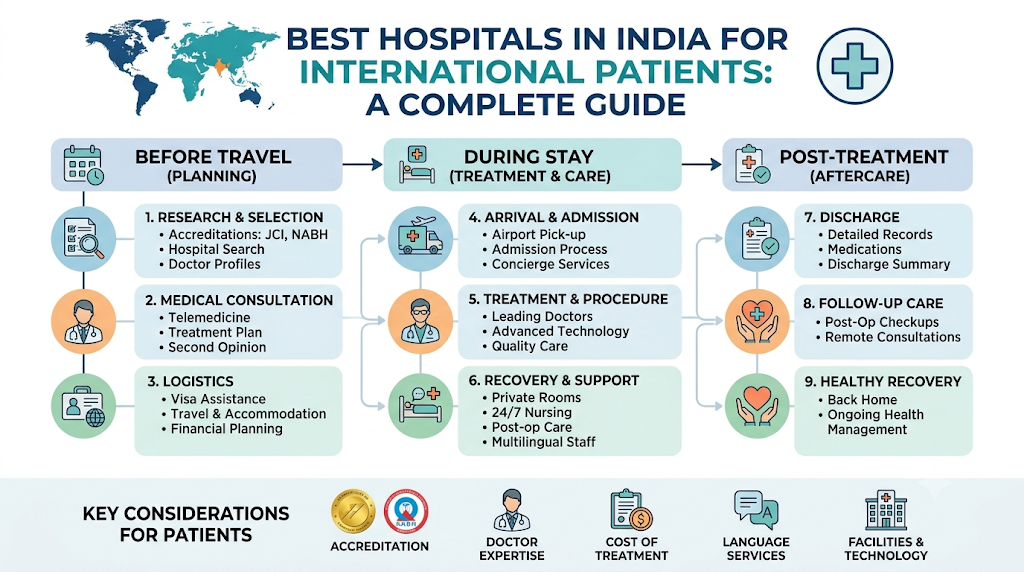
Step-by-Step Patient Journey
- Documentation Review: Share your current diagnostics, imaging scans, and historical medical summaries securely with your chosen provider or facilitator.
- Virtual Medical Assessment: Participate in a secure video conference with the attending specialist to discuss your treatment approach and recovery expectations.
- Financial Mapping & Visa Request: Receive a comprehensive, transparent price quote. The hospital will simultaneously generate the official invitation required for your Indian Medical Visa.
- Arrival and Intake: Utilize the hospital's airport reception service for direct transport to the clinical facility or your pre-arranged hotel.
- Clinical Intervention: Undergo your treatment or surgical procedure supported by continuous, dedicated nursing care.
- Convalescence & Return: Spend your immediate recovery period relaxing at a vetted local hotel, attending scheduled checkups until you receive formal medical clearance to fly home.
Common Challenges and Considerations
A successful medical trip requires balancing potential benefits against real logisitcal realities.
- Post-Surgical Travel Variables: Long flights immediately following surgery present circulatory risks. Patients must strictly adhere to mobility exercises and post-op medication schedules provided by their care team.
- Legal & Visa Requirements: Ensure your passport has ample validity remaining. Never attempt to travel for surgical care on a standard tourist visa; always utilize the official Medical Visa path to avoid regulatory complications.
- Cultural and Communication Nuances: While the clinical staff speaks English fluently, daily logistics outside the hospital can sometimes present minor language gaps. Having a dedicated patient concierge bridges this gap perfectly.
- Continuity of Care: Before you pack your bags, confirm that your local doctor at home is fully informed and ready to manage your long-term follow-up care and routine checks once you return.
Expert Tips for Better Healthcare Decisions
Pro-Tip: Request an exhaustive, itemized package quote before booking. Make sure it covers hospital accommodation, operating theater fees, implants, routine diagnostics, surgeon fees, and standard take-home medications so you don't face unexpected expenses.
- Maintain Digital Copies: Keep a secure digital backup of all clinical reports, current prescriptions, and laboratory results accessible on your phone or cloud storage.
- Bring a Care Partner: If possible, travel with a trusted friend or family member. They provide crucial emotional support and can easily manage administrative tasks while you rest.
- Maintain a Contingency Fund: Keep an extra financial reserve (ideally 15% to 20% of your primary estimate) to easily manage any unexpected diagnostic updates or extended recovery days.
How MyMedicPlus Helps Patients
Navigating an unfamiliar healthcare system thousands of miles away can feel intimidating. MyMedicPlus acts as a reliable digital compass, simplifying the entire experience for global patients. The platform provides a transparent, easy-to-use search network that showcases the best hospitals in India for international patients.Instead of guessing or managing endless open browser tabs, you can use the platform to quickly compare the real knee replacement surgery cost in India or analyze tailored quotes for heart bypass surgery cost in India across top-rated institutions. MyMedicPlus cuts through the noise by matching you directly with accredited medical centers, streamlining your medical visa paperwork, and facilitating early virtual consults. By providing clear insight into the exact treatment cost in India, the platform ensures you avoid hidden surprises so you can concentrate entirely on what matters most: your health.
Frequently Asked Questions (FAQ)
What is a Medical Visa, and how do I obtain one for India?A Medical Visa is a specific entry document issued by the Indian government for people traveling for medical care. To secure one, you must submit a formal medical invitation letter from an accredited Indian hospital, along with your passport and case records, to your nearest embassy or apply via the official online e-Medical Visa portal.Are Indian medical treatments safe compared to Western standards?Yes, care at JCI and NABH-accredited facilities is exceptionally safe. These top-tier hospitals strictly adhere to international clinical protocols, sterile management systems, and safety frameworks that mirror those used in the best hospitals across Europe and North America.Why is the treatment cost in India so much lower than in the West?The lower cost stems from macroeconomic differences, such as lower local operational overheads, affordable real estate, and highly efficient local manufacturing of specialized pharmaceuticals and medical components. This allows hospitals to offer premium care at a lower price point.Can I travel alone for complex medical procedures in India?While the dedicated international patient teams handle day-to-day coordination efficiently, traveling with a companion is highly recommended. A companion offers valuable emotional support and physical help during your initial recovery phase.How long will I need to stay in India after a major surgery?The exact timeframe depends on your specific procedure. Major orthopedic interventions like a knee replacement generally require a stay of 10 to 14 days, while complex cardiovascular surgeries may require 2 to 3 weeks to ensure complete wound healing before flying.Do Indian doctors speak fluent English?Yes, English is the primary medium of instruction across medical universities in India. All major physicians, specialists, and clinical nursing teams communicate fluently in English, ensuring clear communication throughout your stay.How do I manage my medical follow-ups once I return home?Prior to your departure, the hospital provides a complete, itemized medical summary and discharge brief. You can pass these records directly to your primary care physician at home, or schedule follow-up telemedicine sessions with your Indian specialist online.Is traditional alternative medicine available during my stay?Yes, India is globally recognized for its holistic healthcare options. Many top-tier accredited medical facilities offer structured access to authentic alternative health practices, including Ayurveda and Yoga, which can be integrated into your recovery plan under medical supervision.
Conclusion
Making the decision to travel overseas for medical treatment is a significant step, but choosing medical tourism in India provides an excellent balance of affordability and high-quality clinical care. India’s strong network of JCI-accredited facilities, highly experienced specialists, and modern medical technology ensures you never have to delay critical treatments due to long lines or prohibitive costs at home.By conducting careful research, checking hospital credentials, and utilizing transparent evaluation tools, you can manage your medical journey smoothly. Whether you need an advanced joint replacement or specialized heart care, the Indian medical ecosystem is fully equipped to deliver world-class, compassionate treatment tailored to your financial needs. Taking charge of your long-term health begins with exploring your options, evaluating your choices clearly, and moving forward with a trusted resource.
